
Why Brands Choose The Box Printing
Flexible Orders
From 1 box to bulk orders, buy only what you need.
Durable Materials
Premium 10pt–24pt stock for safe product protection.
Fast Turnaround
Most custom orders ship within 2 - 4 business days.
FDA Ready
Packaging designed to support FDA labeling standards.
Custom Box Dividers
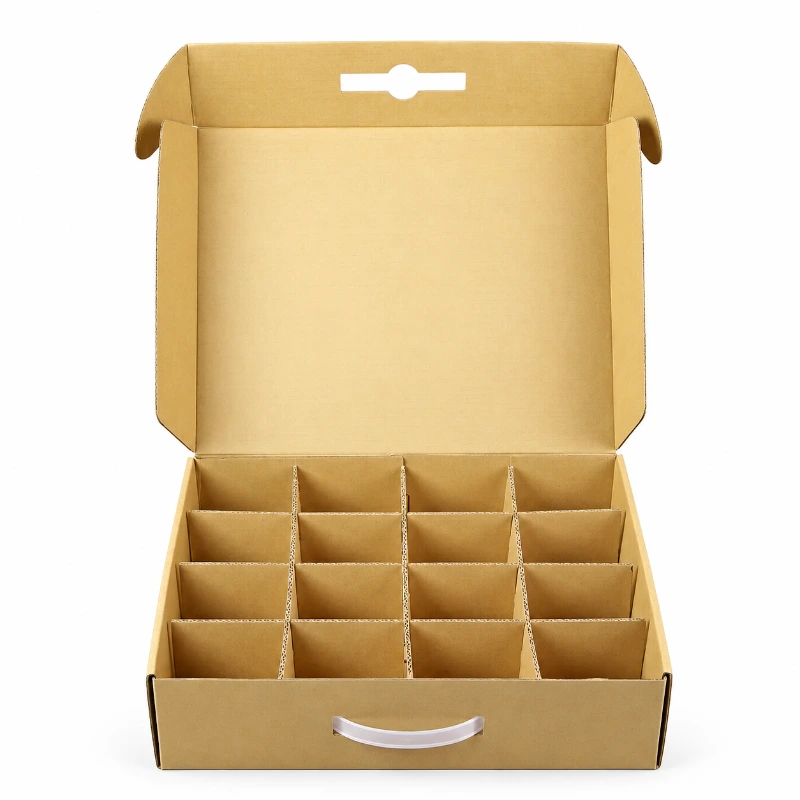
When several products share a box, each one needs enough space to stay separate. A divider gives bottles, jars, accessories, and other items their own compartments, helping keep the order arranged while it is packed, handled, and opened. The Box Printing offers custom box dividers sized around your products and the inside of your packaging. Choose a simple grid for matching items or a layout with different compartment sizes for a mixed set. Orders start at 100 units, with free design support, free mockups, and free shipping across the USA. Include the number of complete divider sets you need so the quantity is clear in your quote.
Start From: $0.03 per item
Description
One Box, Several Products, Less Clutter
Loose items can knock against one another or become mixed together inside a package. Adding more filling around the outside does not always solve that problem. Packaging dividers create separate spaces within the box, so there is a place for each item from the start.
That arrangement is useful at the packing table too. Staff can see which compartments are filled and which still need a product. When the customer opens the order, the contents are easier to identify without moving everything around.
The right layout depends on what you pack:
Several jars from the same range. Equal compartments can keep the jars apart and make the quantity easy to check. Measure the widest part of each jar, including its lid, before choosing the cell size.
A set of different products. A gift containing a bottle, a candle, and a small accessory may need unequal sections. The layout should follow the products rather than forcing them into identical spaces.
Small components or accessories. Separate sections can group matching pieces and help prevent parts from getting mixed. Very small items may also need individual bags or an additional retaining insert.
Individually wrapped gift items. Dividers can keep each piece in its intended position, making the complete set look more organized when the lid opens.
A Divider and a Fitted Insert Do Different Jobs
A divider usually creates compartments by placing walls between products. A fitted insert may use shaped cutouts, supports, or a tray to hold a particular item more closely.
Box partition inserts are useful when separation is the main requirement. If a product needs to be held at a precise angle or prevented from lifting within the box, a fitted insert may be more suitable. Some packages benefit from both.
For example, a grid can separate glass jars, while a base pad adds another layer beneath them. A presentation box might use a divider between two products and a shaped support around one delicate piece.
Dividers alone do not guarantee protection from drops, vibration, or compression. For fragile shipments, the outer box, cushioning, closures, and interior should be considered as a complete package.
Plan the Compartments Before Choosing the Board
Begin with the Actual Products
Place the items in the arrangement you want and measure them in their packed condition. Include labels, lids, wrappers, handles, or anything else that changes the overall dimensions.
For custom box partitions, the compartment should allow the item to be loaded and removed comfortably. A space that is too tight can catch a label or make packing awkward. Too much clearance can leave the product moving more than intended.
If the product size varies slightly between batches, include that information in the brief. The layout needs to accommodate normal variation without losing its purpose.
Use the Inside Measurements of the Box
The divider must fit the usable interior, not the outside dimensions printed on a box specification. Allow for any lining, folded panels, or base insert that reduces the available space.
Board thickness also takes up room. Dividing the total width by the number of products will not give the correct clear compartment width unless the partition walls are accounted for.
If you already have a box you want to keep, send its internal measurements and details of the products. This helps establish whether the proposed layout fits without changing the outer packaging.
Set a Useful Divider Height
A low partition may separate the lower parts of products while leaving them easy to see and grip. Taller partitions may be needed where contact higher up the product is a concern.
For bottle box dividers, check whether the bottles can touch above the partition walls. The shoulders and necks may need additional consideration, depending on their shape and how the package will be handled.
Leave room for the lid to close properly. The divider should not force the top panel upward or press against parts of the product that need clearance.
Choose Material Around Weight and Handling
The material should suit both the compartment layout and the contents. A partition for lightweight accessories does not have the same job as one holding several filled glass jars.
- Paperboard dividers: An option for compact retail packs and lighter products. They can provide a neat appearance without taking up as much space as a thicker construction.
- Corrugated dividers: Worth considering when the layout calls for a more substantial partition. The grade and thickness should be selected around the load and available space.
- Kraft-faced materials: A brown paper appearance can suit simple packaging and unprinted interiors. The underlying construction still needs to match the product requirements.
With cardboard box dividers, thickness is only one part of the choice. The dimensions, slot fit, wall height, and way the divider sits inside the box also affect the result.
If a product has a delicate finish, check the contact surfaces during sampling. Separation can reduce product-to-product contact, but the divider itself should also be suitable for touching the item or its wrapper.
Make Assembly Easy to Repeat
An interlocking divider uses slotted pieces that fit together to form a grid. Other designs may use folds or a different assembly arrangement. The selected method affects how the dividers arrive and how your team sets them up.
For custom compartment inserts, confirm whether the order will be supplied as flat components, pre-assembled sets, or another format. Flat pieces may be convenient to store, while assembled sets can reduce setup work at the packing table.
Try assembling and filling a few samples. The pieces should fit without excessive force, and the finished layout should sit correctly in the box. Check whether the partitions stay in place as products are added and removed.
For larger orders, clarify whether the quoted quantity refers to individual strips or complete sets. This avoids confusion when comparing costs or planning stock.
Keep the Interior Plain or Match Your Branding
Not every divider needs printing. A plain interior can work well when the products and outer box already carry the design. For shipping packs, the main priorities may be fit, separation, and straightforward assembly.
Custom printed box dividers can be useful for presentation packaging. A matching color can tie the compartments to the outer box, while a small label can identify a variant or show where an item belongs.
Keep artwork away from slots and areas that will be hidden once the divider is assembled. Also check how much of the partition remains visible with the products in place. Printing a large design on a covered section adds little to the finished presentation.
If recycled-content material is required, include it in your request and confirm the specification before making claims about the packaging.
Get a Quote for Custom Box Dividers
Send The Box Printing the internal box dimensions, product sizes, packed weights, and number of items per box. A photo or simple sketch of the desired arrangement can help explain the layout. Include any wrapping, base pads, or other inserts that will be used with the dividers.
For wholesale box dividers, list the number of complete sets required for each layout. The Box Printing offers orders from 100 units, free design support, free mockups, and free shipping across the USA.
Review the proposed layout before approval, and ask about physical samples when you need to check assembly, product contact, or compartment fit. If the packaging is intended for delivery, assess the filled package under the handling conditions it will face.
Request custom box dividers that give every item its own space and make your orders easier to pack, check, and present.